The biggest challenge about falling and being in love is how geography inevitably gets tied to every bit of your experience, and how bitter it can quickly get. And when it does, a whole damn city gets dragged in the dirt.
I am a city girl, through and through. I like the convenience spilling through the stores, the overpriced iced coffee at an arm’s length, and not having to wonder about the availability of things much. I have lived a fair few years in Tier-2 cities, but I will choose a Tier-1 metropolis every day. Provided, of course, there is a decent roof over one’s head (quick privilege check.)
Delhi is where I currently am. And this city, as historians and literature enthusiasts would suggest, is a city with great romantic potential. I disagree.
What Historians Say About Delhi
In Dr. Giles Tillotson’s words:
Neither history nor geography, however, fully conveys the city’s characteristic layering: the constant interaction between its present and its past.
Delhi has both kept and dismantled the years of history attached to it.
Take the example of Sunder Nursery. Originally named Azim Bagh by the Mughals in the 16th century, moved into the hands of the British in 1911, soon to become a refugee camp post-Partition, and then finally brought back to life by the Aga Khan Trust for Culture and Delhi’s CPWD. This is a very rough, un-nuanced timeline of Sunder Nursery.
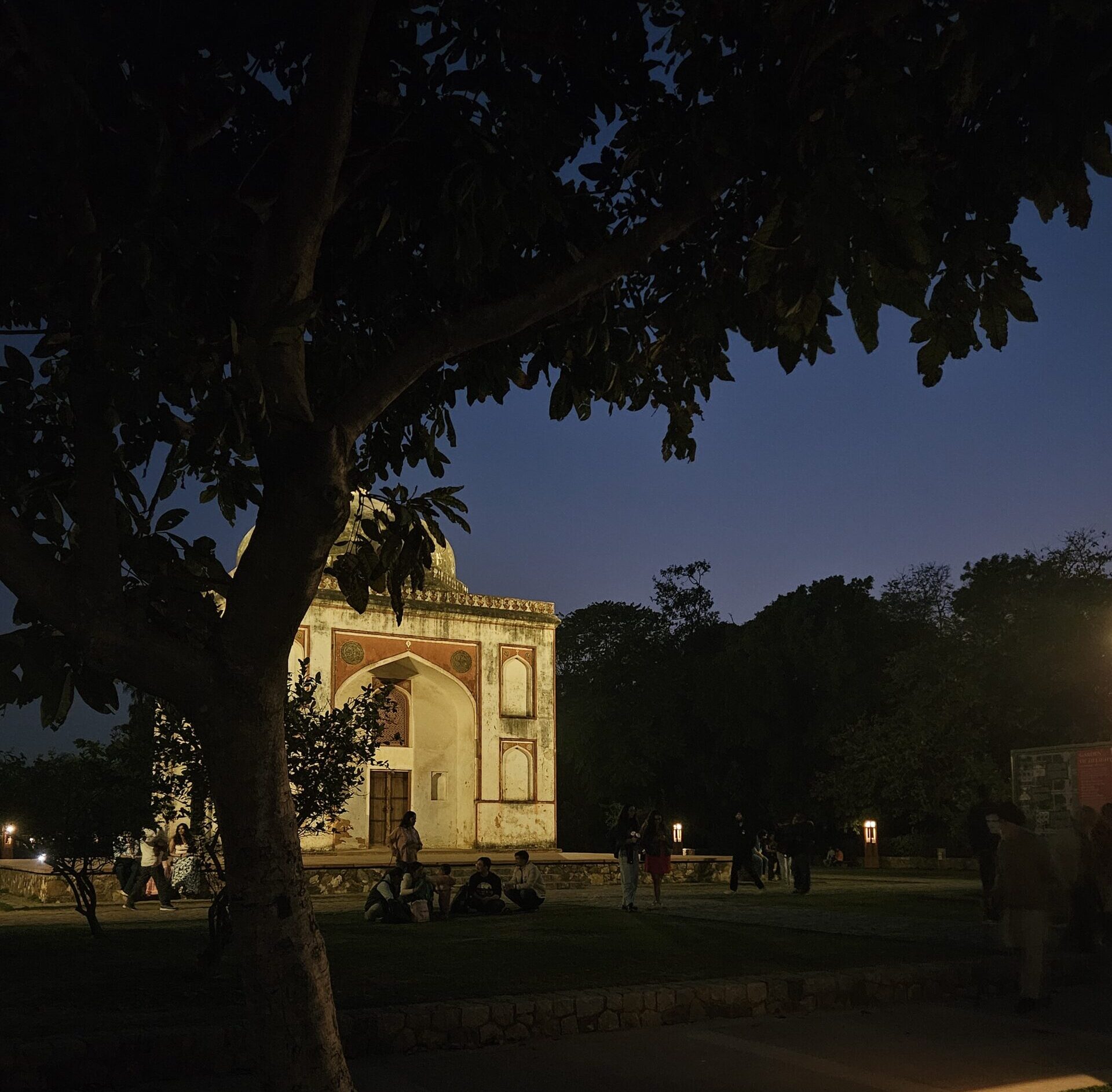
Cut to today, in April of the year 2026, I have just come back after sipping on a nice Espresso Martini at Perch, one of the upscale cafes that now adorn the entrance of this Delhi heritage site.
Came across Maverickbird's blog on Sunder Nursery. Read more here.
How Delhi Defies the Logic of Time
The lore of India Gate is not just limited to being a war memorial. It was a picnic spot, ice cream spot for summer nights, and also protest gatherings. Now apparently, it has a separate establishment where you pay and buy whatever you want to eat (yet to go try this).
Hauz Khas Fort was my first ever college bunk, with my first set of friends in Delhi. We shared some red-coloured noodles and a whole lot of awe around the fort. Couples making out in chambers, the algae-filled pond visible from Social’s Chhatt, while you sip on Banarasi Patiala. (Fun fact: out of all four of us, only I had never lived in Delhi before, and yet it was all of our first time.)

And right at the tip of my fingers, there is Lodhi Garden, where a silent book club now happens somewhere, my favorite Instagram page @dogsoflodhi, the Red Fort, Republic Day parades, and so much more.
Delhi is drowning in Mughal landmarks, legacies of colonial rule, Agrasen ki Baoli, pracheen mandirs, and Hanuman watching over you as your metro crosses Jhandewalan.
And while there are definite timelines for the inception of each of these markers, when you look at them today, they keep melting into each other, kind of like a scoop of Midnight Mint from Big Chill Creamery.
The problem I have with history is that we always try to actually step into the past to understand it. The present you can only read about the past, listen to stories about it, but can only feel it with present sensibilities.
Any other attempt, in my opinion, is a fallacy and an invitation to meddle with time, which both science and faith would unanimously label a bad idea. But I am no historian, and there will always be enough people to tell me that my sensibilities are skewed.
But this is my blog, so I have zero obligation to be politically correct (or incorrect).
Why Delhi is Not Built for Love to Sustain
With all these observations and the lack of them – one would naturally conclude that this city is built for love. The intersection of conquest, progress, political importance, and the potential to grow around the past while still being very rooted in the present.
If you have never been to this city, you must visit Delhi during its 10-day spring. The sky is never cleaner, the flowers never brighter, and every auto ride feels like rebirth.
It is a place that has every potential for the birth of romance. The city has pockets.
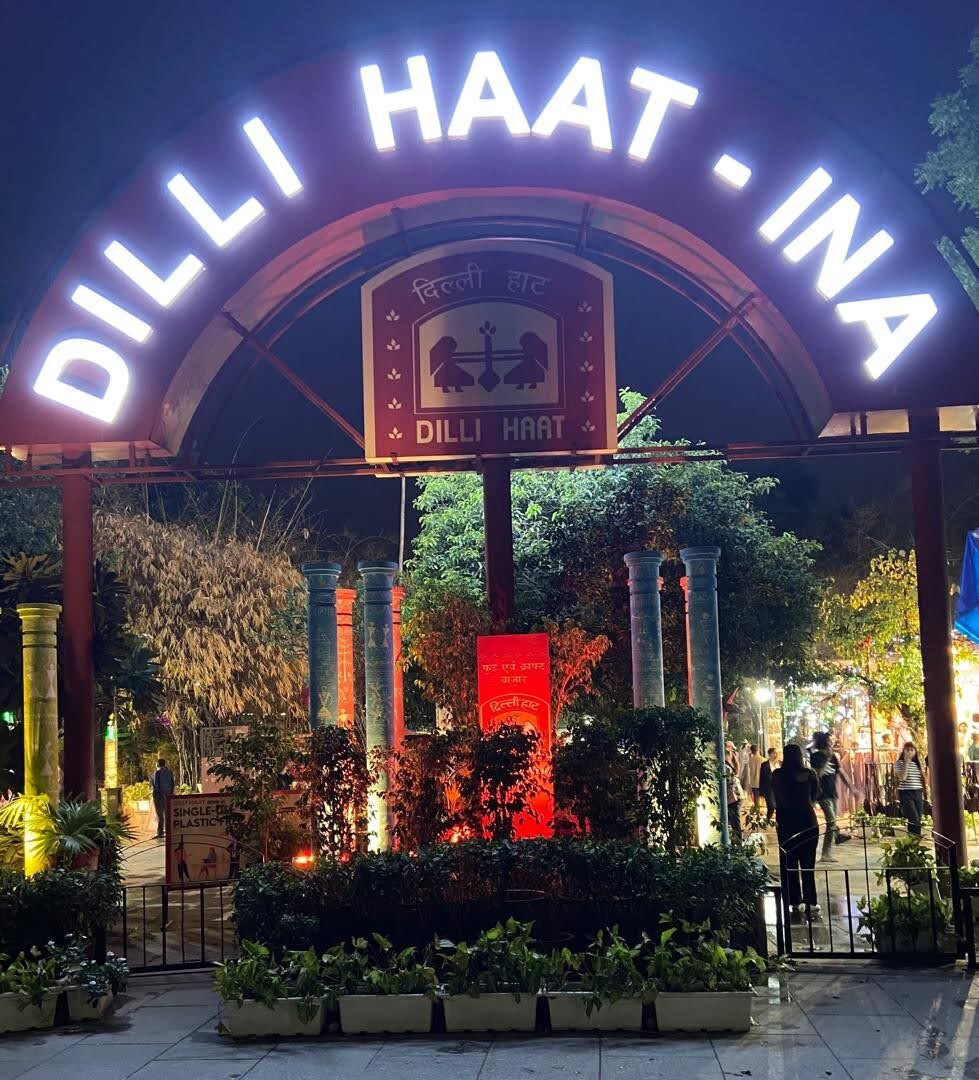
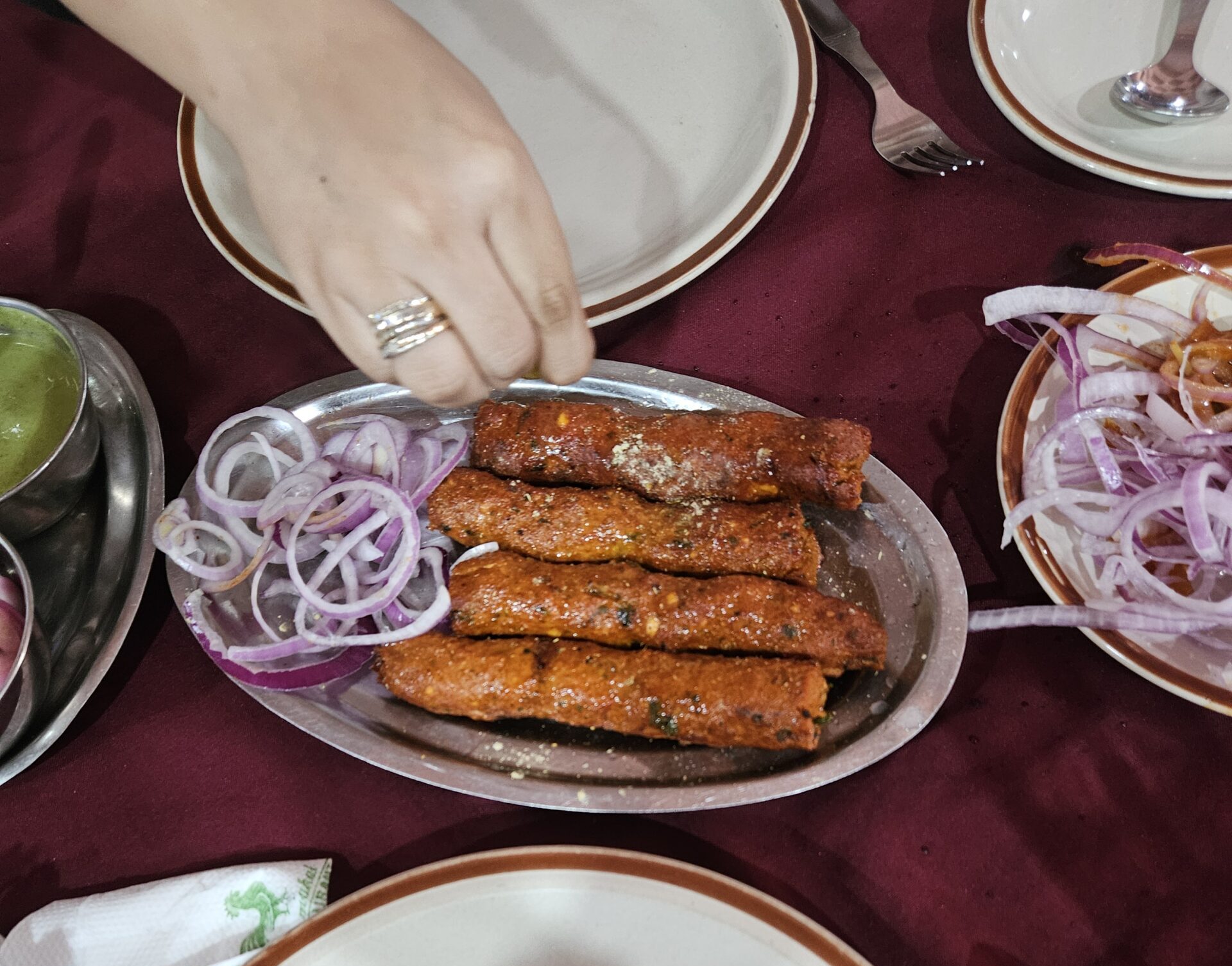
Scenic greenery to laze around in, driving around the Embassy area and Lutyens, spending an evening taking a bite of Azam’s Galauti, looking at trinkets in Dilli Haat, walking shoulder to shoulder with unknown strangers in Connaught Place, catching a play at one of the theatres at Mandi House, spending time in the British Council Library, looking at paintings in Triveni Art Gallery, exploring the speakeasy scene and trying a bunch of cocktails, and enjoying your ride back home in an auto; the wind on your face, probably the hot air blown by buses too.
From My Days of Being a Student in Delhi
I have spent two years in one of the most beautiful universities and campuses in the country. JNU. Very well known for its research, political turmoil, and grandiosity, and how the Aravalli with its nilgais and biodiversity engulfs the hostels, the dhabas, the centres, the students, and the professors.

Theoretically, love would be the easiest thing to happen.
You’re young, you’re idealistic, the environment cushions that experience for you. But here is the thing about JNU, the Aravalli doesn’t just hold it, it seals it. And any love born inside a bubble, often carries the texture of the microcosm it represents and not always of the city that you would inhabit when you step out. When it survives, it survives in spite of Delhi.
The University of Delhi is quite opposite. It is spread across the entire city. Every romance, every love born in the colleges of this university also carried the flavour of Delhi being a little too much. Delhi stops being just the pincode here, but a third person in the equation.
What Delhi Really Becomes
The point I am trying to make is that the city must be in the backdrop for romance to unfold.
Delhi has its own character.
Being the capital city, it has already been spoken about endlessly, romanticized. From the trickery of Daulat ki Chaat, Mohabbat ka Sharbat, to heritage walks and food walks in Chandni Chowk. The city can be a lot. It’s too hot during summers, too cold during winters, the spring doesn’t last long enough, and post-Diwali Delhi is practically a gas chamber.
It is a city that lives and breathes like a forest, like a river, one that houses creatures, and not creatures making the city what it is.
In my most humble opinion, I would conclude that Delhi sustains friendships better than romance. Because friendship will always make room for more. Romantic love, on the other hand, might become a little too fragile for what this city has the potential to represent.
My advice? Love anyway. Rebel and conquer the narrative that you want to own. The city will become what you want to make of it.
Delhi is in me, as much as I am in Delhi.
Note: This is part of a series of blogs that I want to write, absolutely untouched by AI.
Be First to Comment